Cut pile is soft and fluffy. Loop pile is tight and structured. Here's what actually separates them — and why it matters for your rug.
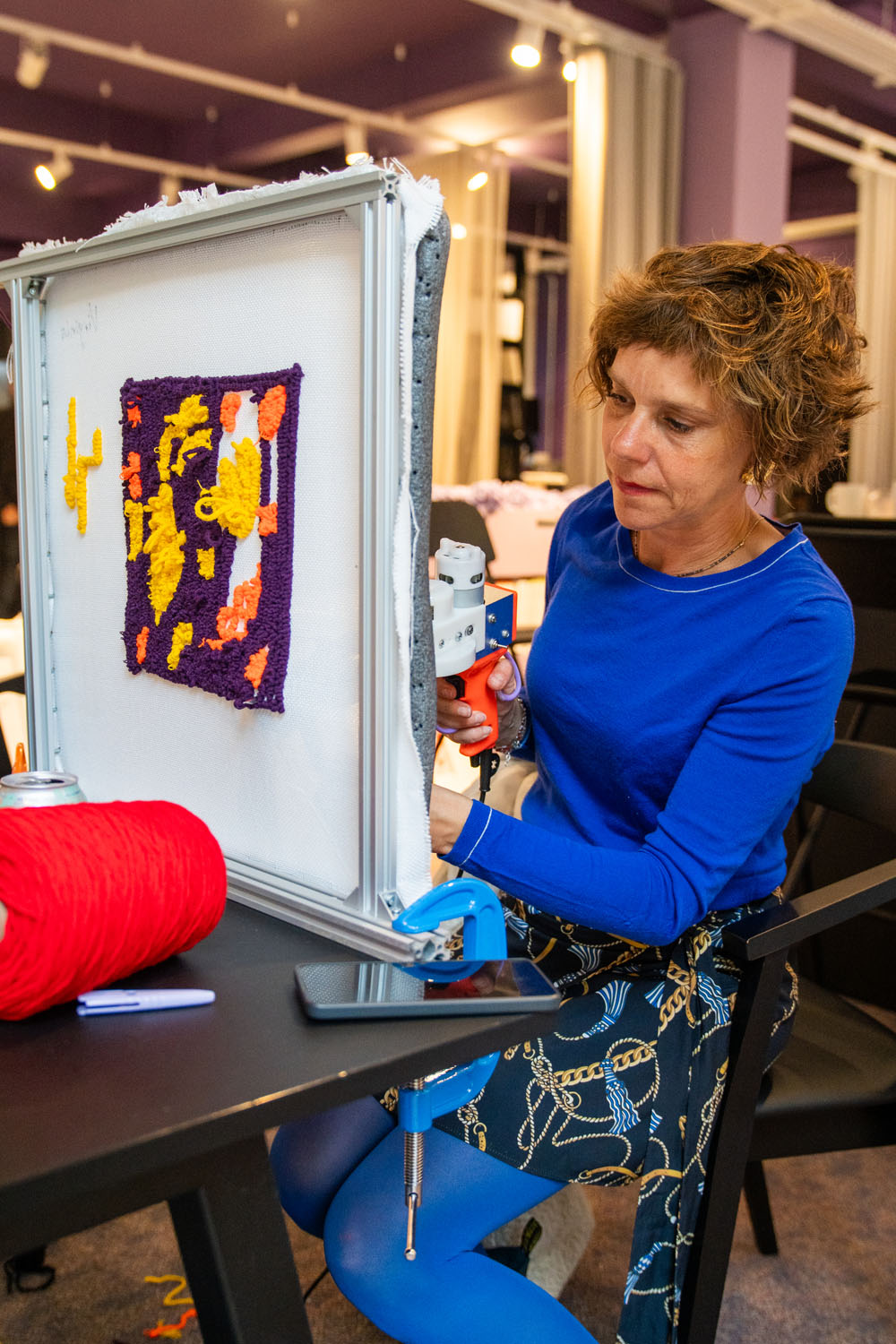
Pick up a tufting gun for the first time and you'll hit this question almost immediately: cut pile or loop pile?
Most workshops only offer one. Most guides overcomplicate it. Here is what you actually need to know — including which one we use at Cheeky Studio, and why we offer both.
Cut pile is the most common tufting technique. The gun punches yarn through the backing fabric and cuts each loop as it goes, leaving upright, open-ended fibres. The result is a soft, plush surface — the kind you probably picture when someone says "tufted rug".
It is beginner-friendly, trims cleanly, and makes bold, graphic designs easy to read. Almost every workshop in London offers cut pile only.
Best for: bold shapes, portraits, lettering, colour blocking, beginner sessions.
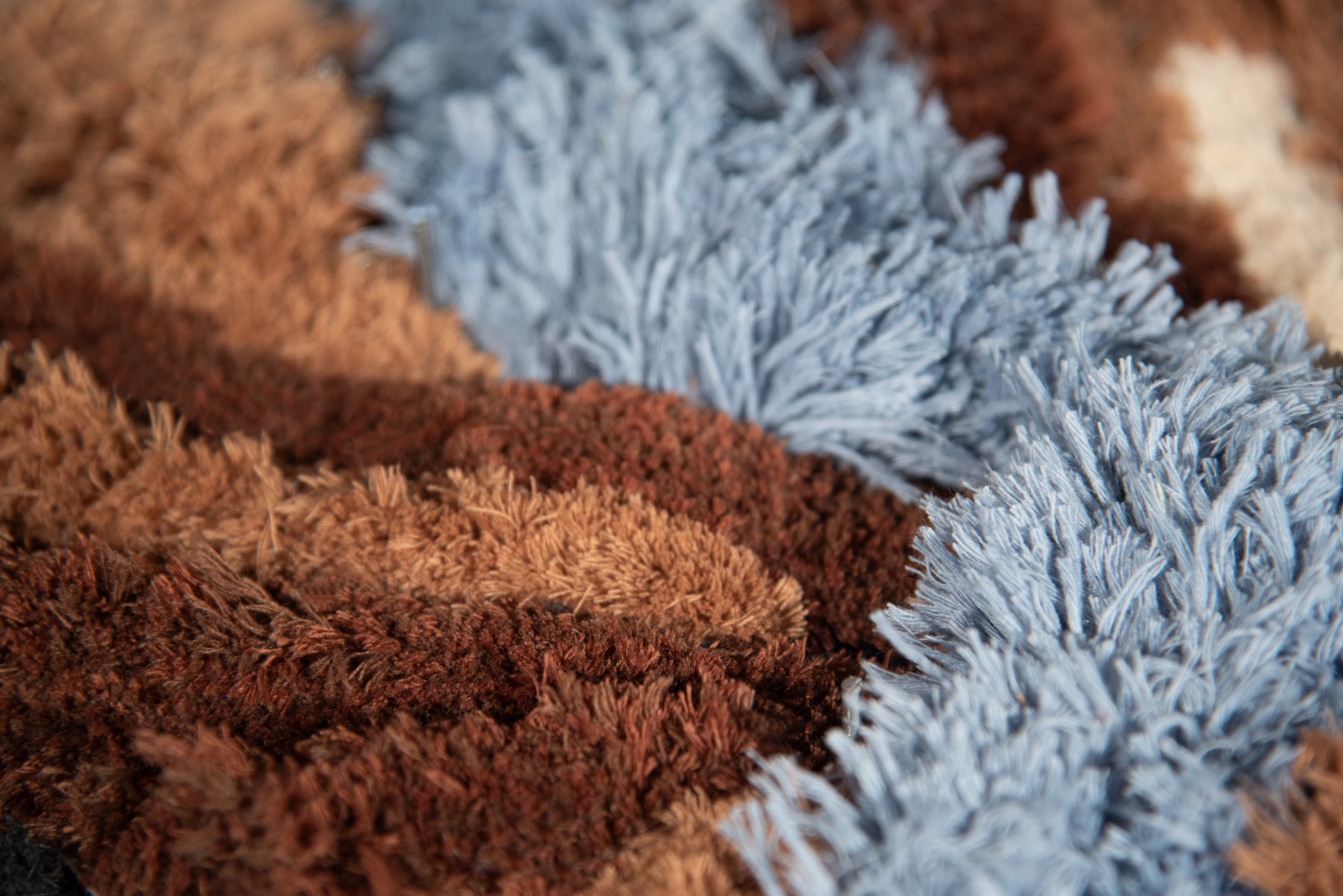
Loop pile leaves the yarn uncut. The gun punches the yarn through and leaves small, intact loops sitting on the surface. The texture is tighter, more structured, and noticeably different underfoot — closer to a Berber carpet or a classic wool rug.
Because the loops are connected, the surface holds detail well and is more durable than cut pile over time. It is also trackless, meaning footprints and vacuum marks do not show the way they can on a fluffy cut pile surface.
Best for: detailed patterns, geometric designs, rugs that will see real floor use, mixed-texture pieces.

Cut PileLoop PileSurfaceSoft, fluffy, plushTight, structured, loopedTexture feelLike a stuffed toyLike a classic wool rugDetail clarityGood for bold shapesBetter for fine detailDurabilityModerateHigherTracks / footprintsCan show on dense pilesTracklessTrimming and shapingEasy — sculpt after tuftingMore limitedBeginner-friendlyYesSlightly more control required
Cut pile. The fibres sit upright independently, so mistakes are easier to correct, and the surface can be trimmed and shaped after tufting to clean up edges and blend colours. At Cheeky Studio, most first sessions use cut pile — it is the more forgiving of the two.
That said, loop pile is not difficult. It just asks for slightly steadier movement with the gun and a bit more attention to tension. Many guests try loop pile on a second visit once they know how the gun handles.
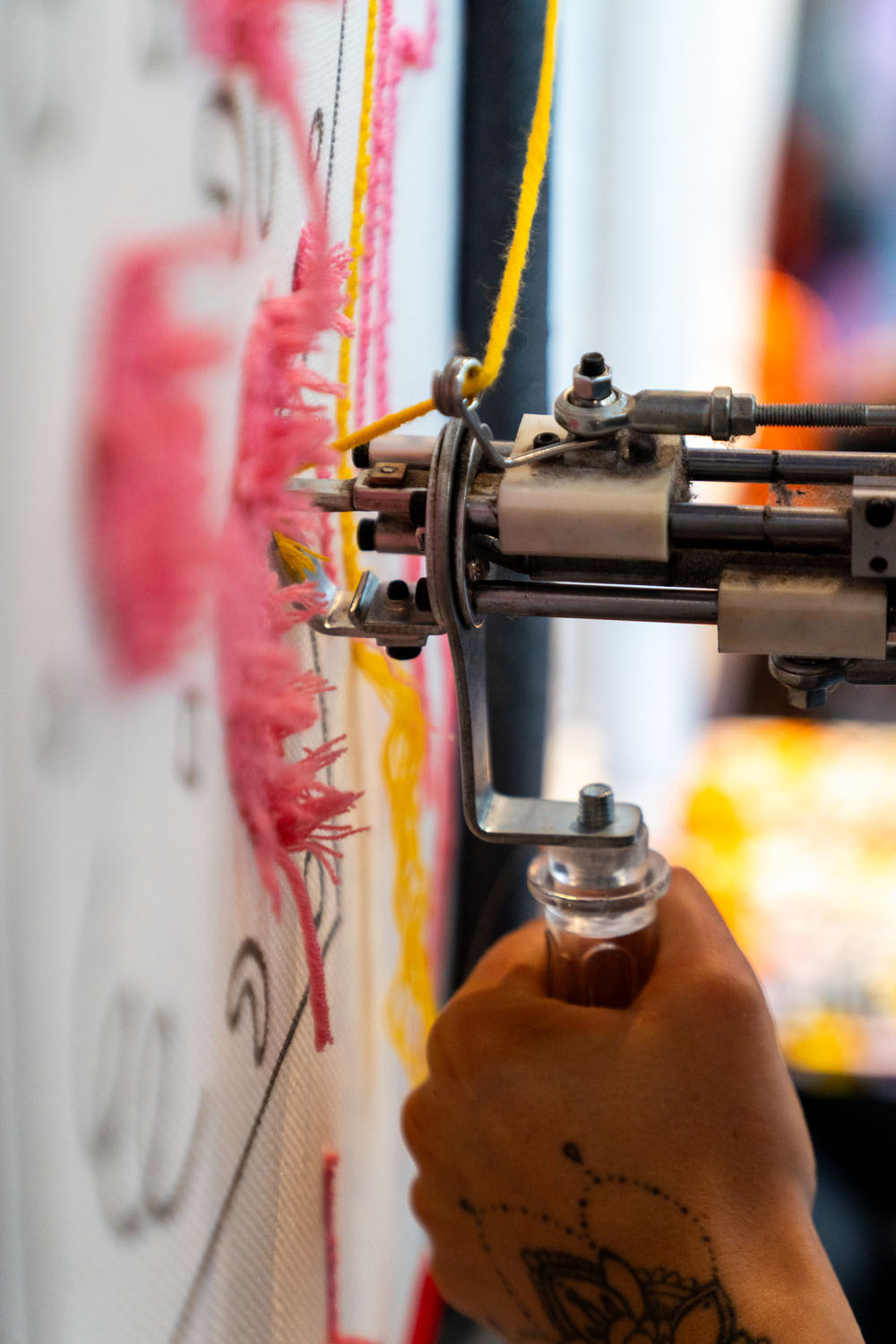
Close-up of a tufting gun in action at Cheeky Studio, showing pink cut pile yarn being punched through tufting fabric
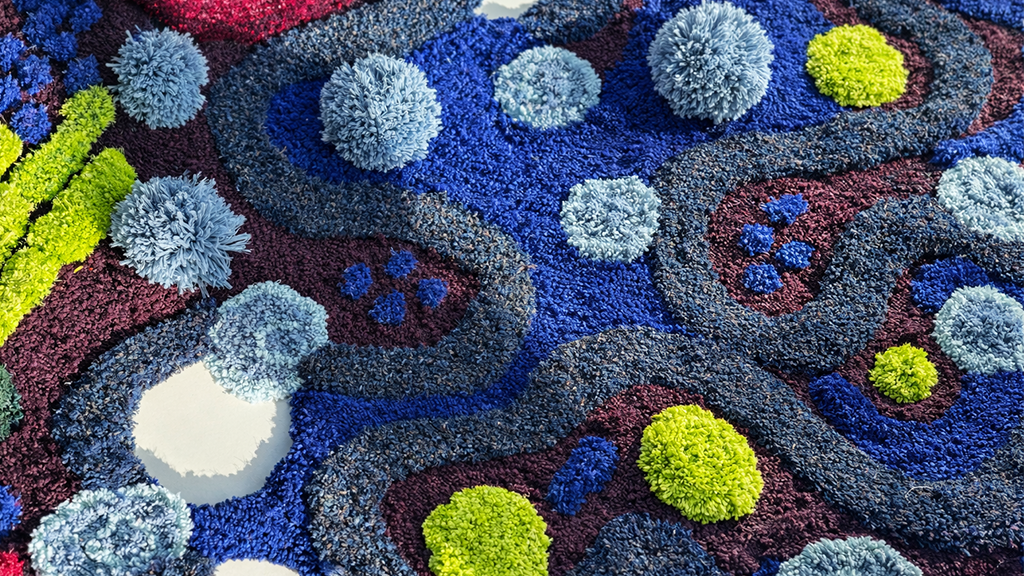
Yes — and some of the most interesting rugs do exactly this. Mixing cut and loop pile in a single piece creates texture contrast: a fluffy cut pile background with a tight loop pile outline, or raised cut pile lettering over a flat loop pile field. The two techniques complement each other, and the contrast shows up clearly in the finished piece.
At Cheeky Studio, both cut pile and loop pile are available in every session. You can choose one or combine them — whatever your design calls for.
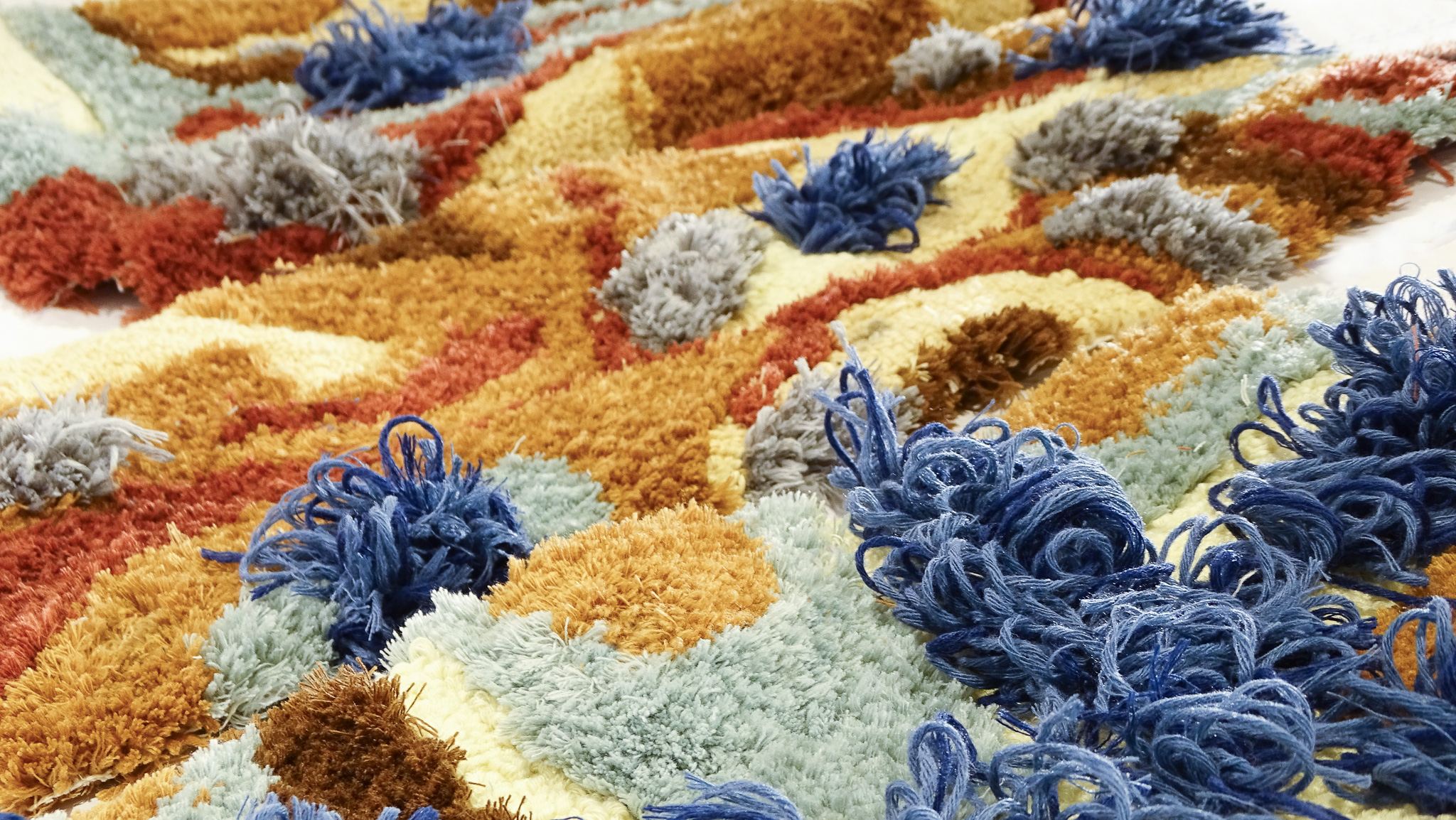
Both. We are one of the few tufting studios in London that offer cut pile and loop pile in the same workshop. Most studios stock cut-only guns; we have both, and our team can guide you on which suits your design before you start tufting.
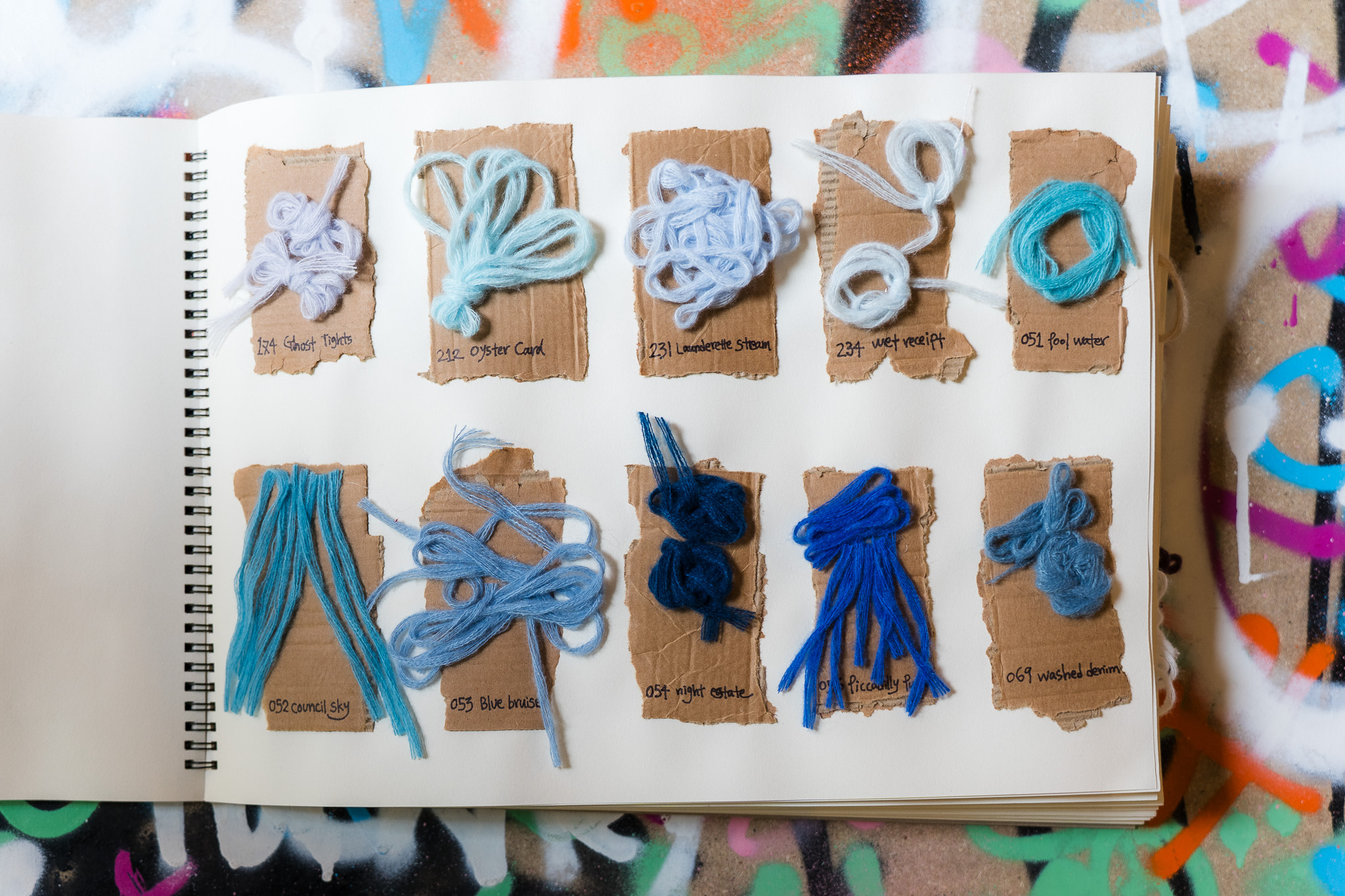
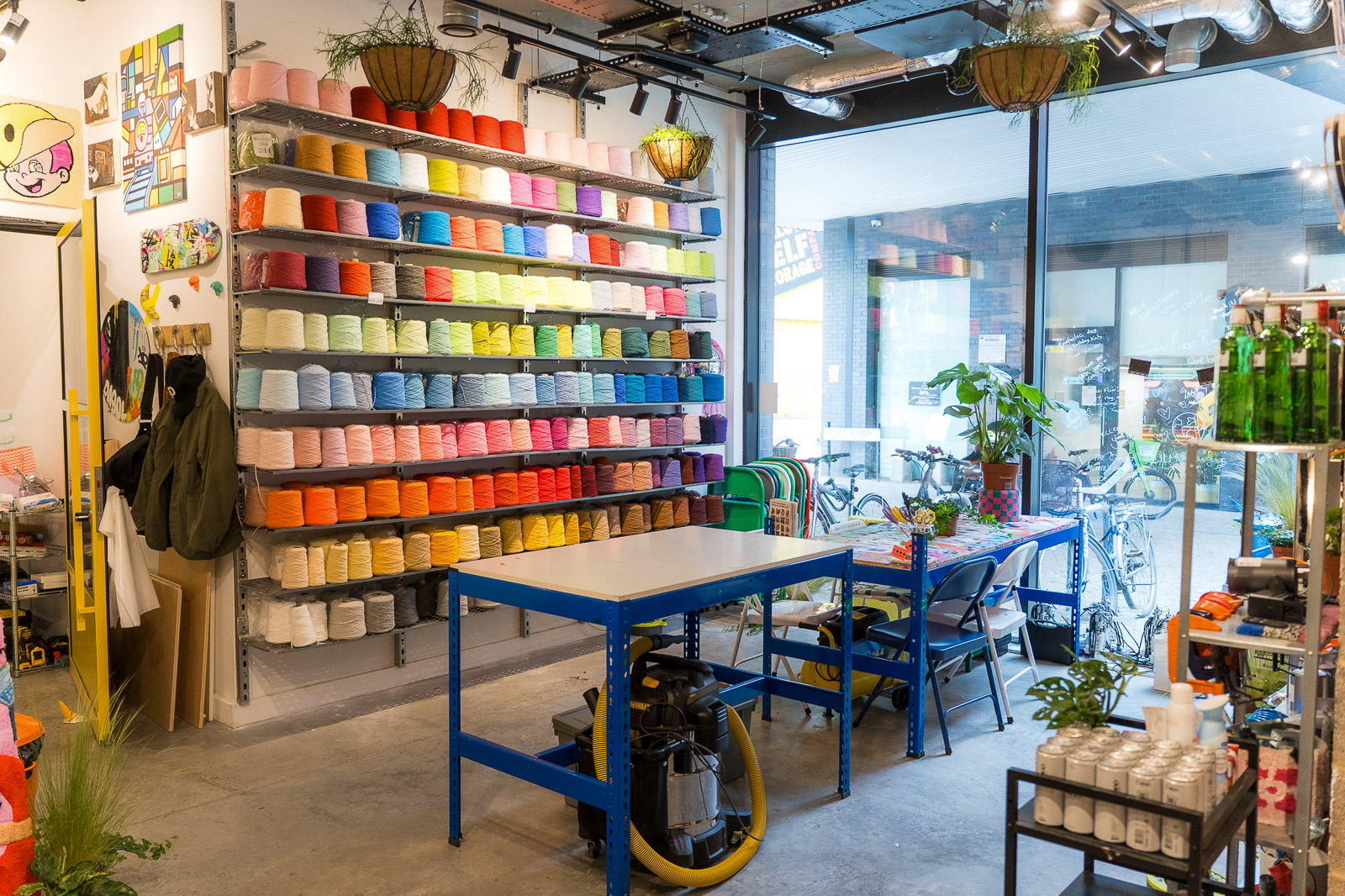
We also use our own recycled yarn (cheekyarn, 600g/890m, GRS-certified, 115 colours) for every session, which works cleanly with both techniques.
Cut pile is soft, bold and beginner-friendly. Loop pile is structured, durable and better for fine detail. Both are valid — the right choice depends on the design you want to make.
If you are not sure, come in and we will help you decide before you pick up the gun.
👉 Book a tufting workshop in Hackney Wick
Standard Rug (40x40cm, 3 hours): £145
Grand Rug (55x55cm, 5 hours): £195
Is cut pile or loop pile better for a beginner?
Cut pile is generally easier to start with. The fibres sit independently and can be trimmed after tufting, which makes corrections straightforward. Most first-timers at Cheeky Studio tuft cut pile on their first visit.
Which pile type lasts longer?
Loop pile. Because the loops are connected to each other, they resist wear better than cut pile fibres, which sit loose in the backing until glued. For a floor rug that will see regular use, loop pile is the more durable choice.
Can you mix cut pile and loop pile in one rug?
Yes. Mixing the two in a single design creates visual and textural contrast. It is a technique commonly used to add depth to more complex pieces.
Does Cheeky Studio offer both cut pile and loop pile?
Yes — both are available in every workshop session at our studio in Hackney Wick, London. Most tufting workshops in London offer cut pile only.
What yarn does Cheeky Studio use?
We use cheekyarn, our own GRS-certified 100% recycled PET yarn. It comes in 115 colours and works well with both cut and loop pile techniques.